Table of Contents
Scaling a business is often seen as a thrilling achievement, signaling that the organization is gaining traction, increasing revenue, and reaching new markets. However, this phase of growth brings a complex set of challenges that many leaders underestimate. One of the most critical—and often overlooked—factors in successful scaling is the presence of a robust Central Operating system.
Without a unified framework to coordinate processes, data, and communication, even small inefficiencies can quickly escalate into major operational bottlenecks. Early in a company’s journey, these gaps might seem minor and manageable. Teams can rely on informal workflows, spreadsheets, and ad-hoc solutions to keep things running. Yet, as the business grows, the lack of a centralized system exposes weaknesses across departments.
Tasks take longer to complete, errors become more frequent, and decision-making slows due to inconsistent or incomplete data. These hidden inefficiencies not only increase operational costs but also jeopardize profitability and long-term stability. In essence, scaling without a Central Operating system is like building a high-rise on a shaky foundation—while initial progress may appear smooth, structural cracks emerge under pressure, threatening the organization’s ability to sustain growth and maintain competitive advantage.
Understanding the Role of a Central Operating System
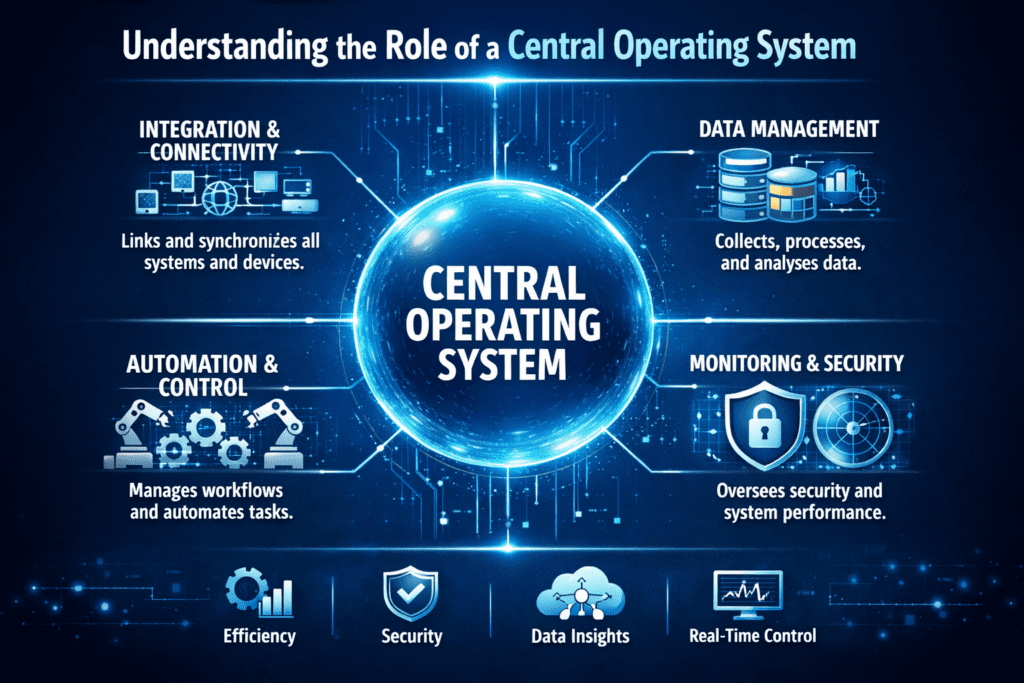
A Central Operating system acts as the structural backbone of any growing organization, serving as the critical framework that supports every operational process. At its core, it consolidates data from multiple departments into a unified platform, ensuring that every piece of information—from sales figures and inventory levels to customer interactions and financial reports—is easily accessible and consistently accurate.
By standardizing processes across the business, a Central Operating system eliminates ambiguity, allowing teams to follow clear, repeatable procedures that improve efficiency and reduce errors. CollabCRM
Without such a system in place, organizations risk operating in disconnected silos, where departments rely on separate tools, spreadsheets, or even manual methods to manage their work.
This lack of integration can result in communication breakdowns, duplicated efforts, and a constant scramble to locate critical information. For example, a sales team might close a deal without knowing the current inventory status, or finance may generate reports based on outdated data, leading to inaccurate forecasts and poor strategic decisions.
Moreover, the absence of a Central Operating system makes it difficult to maintain quality and consistency across the organization. As processes vary from one team to another, standards erode, mistakes increase, and the overall efficiency of the business declines. Response times to customer inquiries or operational issues slow down because employees spend valuable hours reconciling conflicting data instead of focusing on problem-solving or growth initiatives.
In essence, a Central Operating system is not merely a technological tool—it is the operational heart of the company. It provides a single source of truth, streamlines workflows, and ensures that every team member has access to the right information at the right time. For growing businesses, implementing such a system is a decisive step toward reducing friction, minimizing errors, and creating a scalable, sustainable foundation for long-term success.
Read more : Why Growing Businesses Fail Without a Central Operating System
Hidden Costs of Scaling Without a Central Operating System

1.Operational Inefficiency
When a business operates without a Central Operating framework, everyday tasks that could be automated or streamlined instead become repetitive and time-consuming. Manual processes, such as updating spreadsheets, cross-checking information between departments, or following inconsistent procedures, start to accumulate, creating a significant drain on productivity.
Teams are forced to spend a disproportionate amount of their time coordinating across multiple tools and platforms, often duplicating efforts just to ensure data aligns. This constant back-and-forth not only slows down operations but also increases the likelihood of errors—mistakes in data entry, miscommunication between departments, or overlooked updates can have cascading effects throughout the organization.
Rather than focusing on strategic initiatives that drive growth—like launching new products, optimizing customer experience, or exploring new market opportunities—employees are trapped in a cycle of administrative work and problem-solving. The organization becomes reactive instead of proactive, addressing issues as they arise instead of anticipating them. ijcem.in
Over time, these inefficiencies compound, making it harder for the company to scale effectively. A Central Operating system addresses this by centralizing workflows, automating repetitive tasks, and providing a single, reliable source of information. This allows teams to redirect their energy toward high-impact activities that contribute directly to growth, innovation, and long-term success.
2.Poor Decision-Making
One of the most significant risks of scaling without a Central Operating system is poor decision-making caused by fragmented and inconsistent data. When information is scattered across multiple tools, spreadsheets, or disconnected systems, managers and executives are left with an incomplete picture of the business. This lack of clarity can lead to decisions based on outdated figures, assumptions, or partial insights—decisions that may seem logical in the moment but carry hidden costs that ripple throughout the organization.
For example, without a Central Operating framework, a manager might approve increased production based on inventory data that hasn’t been updated, resulting in overstocking and unnecessary storage costs. Similarly, marketing budgets might be allocated to campaigns without a clear understanding of past performance, leading to wasted resources and missed opportunities. Each of these decisions, while small on its own, can accumulate into significant operational inefficiencies and financial losses over time.
A Central Operating system mitigates these risks by consolidating all critical business data into a single, unified platform. This ensures that leaders have access to accurate, real-time insights across departments, whether it’s sales figures, customer behavior, supply chain metrics, or financial performance. With this centralized access, executives can make informed, strategic decisions quickly, respond proactively to challenges, and seize growth opportunities that would otherwise be overlooked. Wikipedia
In essence, a Central Operating system transforms decision-making from a reactive, error-prone process into a proactive, data-driven strategy. It provides the confidence and clarity leaders need to steer their organizations effectively, even in the face of rapid growth and increasing operational complexity.
3.Increased Labor Costs
As businesses grow, inefficiencies become more apparent, and many organizations attempt to address these challenges by simply hiring additional staff. While adding headcount may seem like a quick way to manage increased workloads, without a Central Operating system, this approach is often a temporary and costly band-aid rather than a true solution.
When processes are fragmented and data is scattered across multiple systems, new employees inherit the same inefficiencies that already exist. They spend a significant portion of their time reconciling data, coordinating across different departments, and correcting errors, rather than contributing to meaningful productivity or growth.
The result is a rise in labor costs without a proportional increase in output. Businesses may find themselves caught in a cycle where they continually add staff to compensate for process gaps, only to see overall efficiency remain stagnant. Over time, this not only inflates operational expenses but also impacts employee morale, as teams become frustrated by repetitive tasks, unclear workflows, and a lack of clarity in responsibilities.
A Central Operating system addresses this challenge by streamlining processes and automating repetitive tasks. By centralizing workflows and providing a single source of truth, it allows employees to focus on high-value activities that drive growth, innovation, and customer satisfaction.
In effect, a well-implemented Central Operating framework reduces the need for unnecessary headcount, optimizes existing resources, and ensures that every team member’s effort contributes directly to the organization’s strategic objectives.
Investing in a Central Operating system may seem like a significant upfront cost, but it pays for itself by preventing the escalating labor expenses that often accompany unmanaged growth. Companies that adopt such a system can scale efficiently, maintaining productivity while keeping operational costs under control.
4.Customer Experience Challenges
Scaling a business without a Central Operating system doesn’t just impact internal operations—it can have a direct and often severe effect on customer experience. When information is fragmented and processes are inconsistent, teams struggle to provide timely, accurate, and seamless service.
Customer inquiries may be delayed, orders can be mishandled, and support teams often operate without full visibility into the customer’s history or current needs. These inefficiencies can frustrate clients, damage trust, and ultimately harm the company’s reputation.
For example, consider a growing e-commerce business without a Central Operating framework. The customer service team may not have real-time access to inventory levels, shipment tracking, or recent order activity.
As a result, answering customer queries becomes a slow, error-prone process, leaving customers dissatisfied. Meanwhile, marketing and sales teams might be unaware of customer complaints or feedback, leading to missed opportunities for upselling, retention, and personalized engagement.
A Central Operating system solves these challenges by creating a single source of truth across the organization. Every department—from support and sales to fulfillment and marketing—can access the same accurate, real-time information.
This ensures that customers receive consistent, informed, and timely responses at every touchpoint. The ability to streamline communication, reduce errors, and provide proactive solutions not only improves customer satisfaction but also strengthens loyalty and enhances the brand’s reputation.
In a competitive market, customer experience can be a deciding factor between business growth and stagnation. Implementing a Central Operating system equips companies with the tools they need to scale without sacrificing service quality, allowing them to deliver exceptional experiences even as operational complexity increases.
5.Compliance and Security Risks
As businesses expand, compliance and data security become increasingly critical, yet organizations scaling without a Central Operating system are more vulnerable to breaches, regulatory issues, and costly mistakes. When operational processes are fragmented and data is stored across multiple platforms, maintaining oversight becomes nearly impossible.
Without a unified system, it’s difficult to track who has access to sensitive information, ensure that regulatory requirements are met consistently, or audit processes efficiently. This lack of control exposes companies to legal risks, fines, and reputational damage that could have long-lasting effects on growth and customer trust.
For instance, in industries with strict regulatory standards—such as finance, healthcare, or e-commerce—failure to maintain accurate records, track transactions, or enforce proper access controls can lead to severe penalties. Even in less regulated sectors, unsecured or inconsistent data can result in breaches, lost intellectual property, and diminished customer confidence. The cost of resolving these issues often far exceeds the investment required to implement a centralized system in the first place.
A Central Operating system addresses these risks by providing a single, secure platform to manage all critical business data and workflows. Access permissions can be standardized, audit trails automatically maintained, and compliance requirements systematically enforced across the organization. By centralizing oversight, companies not only reduce the risk of regulatory violations but also strengthen cybersecurity, ensuring that sensitive customer and operational data remains protected.
In addition to reducing risk, a Central Operating system enables businesses to scale confidently. Leaders can focus on growth initiatives, knowing that the organization operates within a secure, compliant, and well-documented framework. In today’s fast-paced and highly regulated market, the ability to combine operational efficiency with robust security and compliance practices is no longer optional—it is essential for sustainable success.
Real-Life Impact on Businesses

To truly understand the consequences of scaling without a Central Operating system, consider the example of a mid-sized e-commerce company undergoing rapid expansion. In the absence of a centralized framework, critical functions such as inventory management, sales tracking, and customer support operate independently, each relying on its own processes, tools, and data sources. This lack of integration creates friction at every level of the organization.
Orders that should be processed efficiently often face delays because the fulfillment team does not have real-time visibility into inventory levels. Meanwhile, customer service representatives struggle to provide accurate updates to clients, leading to increased complaints and negative reviews.
On the financial side, the accounting department grapples with reconciling transactions from disconnected systems, a time-consuming process prone to errors. Employees across departments spend hours manually coordinating information, rather than focusing on strategic tasks that drive growth.
The cumulative effect of these inefficiencies is substantial. Revenue opportunities are lost as delayed orders and poor customer experiences impact repeat business. The company’s reputation suffers when customers encounter inconsistent service, and employee burnout rises as teams are forced to compensate for the lack of streamlined processes. Over time, this operational strain can undermine the company’s ability to compete in a fast-moving market.
Eventually, the organization faces a stark choice: either invest in a Central Operating system to unify operations, standardize workflows, and provide real-time insights, or continue bearing the hidden costs of inefficiency, which escalate alongside growth. Companies that take the proactive step of implementing a centralized system gain a clear advantage—they can scale with confidence, maintain high-quality service, and empower employees to focus on innovation and value creation rather than firefighting day-to-day operational issues.
The Solution: Implementing a Central Operating System

While investing in a Central Operating system may appear costly at first glance, the long-term benefits far outweigh the initial expense. For growing organizations, such a system is not just a technological upgrade—it is a strategic investment that fundamentally transforms the way a business operates, enabling sustainable growth and resilience in the face of increasing complexity.
A Central Operating system streamlines operations by centralizing workflows and automating repetitive tasks. This reduces redundancies, minimizes errors, and frees employees from time-consuming administrative work, allowing them to focus on initiatives that drive growth and innovation.
By consolidating all critical data into a single source of truth, the system ensures that every team—whether sales, finance, operations, or customer support—works with accurate and up-to-date information. This alignment enhances coordination across departments and prevents the inefficiencies that often accompany siloed systems.
Decision-making is also dramatically improved. With real-time insights at their fingertips, leaders can analyze trends, anticipate challenges, and make data-driven choices quickly and confidently. There is no longer a need to rely on outdated spreadsheets or incomplete reports, reducing the risk of costly mistakes and missed opportunities.
Moreover, a Central Operating system reduces labor overhead. By automating repetitive processes and simplifying complex workflows, companies can optimize existing resources without continuously increasing headcount. Employees can dedicate their time and expertise to high-value work, improving productivity and job satisfaction simultaneously.
Customer experience is another area where the benefits are tangible. With a unified system, teams have immediate access to accurate customer information, allowing them to respond to inquiries faster, resolve issues more effectively, and provide a consistent, high-quality experience across all touchpoints. This not only drives customer loyalty but also strengthens the company’s reputation in competitive markets.
Finally, implementing a Central Operating system enhances compliance and security. By centralizing sensitive information and standardizing access controls, organizations can maintain regulatory compliance more easily, monitor processes effectively, and protect critical data from breaches or misuse.
In essence, a Central Operating system creates a reliable operational foundation that supports every aspect of the business. It enables organizations to scale with confidence, knowing that processes are efficient, data is trustworthy, teams are aligned, and the company is positioned to adapt to both growth opportunities and market challenges. For businesses looking to grow sustainably, the adoption of a Central Operating system is no longer optional—it is essential.
Conclusion
Scaling a business without a Central Operating system comes with hidden costs that can quickly escalate—impacting efficiency, decision-making, labor expenses, customer satisfaction, and compliance. While these challenges may be manageable in the early stages, as organizations grow, the lack of a centralized framework exposes operational weaknesses that can threaten profitability, brand reputation, and employee morale.
A Central Operating system addresses these challenges by providing a unified platform for data, workflows, and communication. It ensures that teams have access to accurate, real-time information, enabling faster, more informed decisions, reducing errors, and streamlining operations. By automating repetitive tasks and centralizing oversight, companies can optimize labor, enhance productivity, and focus on strategic initiatives that drive growth.
Moreover, a Central Operating system improves customer experience by ensuring consistent, high-quality service across every touchpoint, while also safeguarding compliance and security in an increasingly complex regulatory environment. This combination of operational efficiency, data integrity, and risk management allows businesses to scale confidently and sustainably.
Ultimately, the real cost of scaling without a Central Operating system is far greater than the investment required to implement one. Companies that prioritize a centralized framework lay the foundation for long-term success, empowering teams, delighting customers, and maintaining a competitive edge in today’s fast-paced business landscape.
For any organization looking to grow efficiently and sustainably, adopting a Central Operating system is not just a strategic advantage—it is an essential step toward achieving scalable, lasting success.
Read more : When a Business Outgrows Spreadsheets and Manual Processes