Table of Contents
In the rapidly evolving digital economy of today, businesses increasingly depend on sophisticated Business Systems to manage the complex web of operations, customer interactions, and workforce management. These systems—ranging from Enterprise Resource Planning (ERP) platforms that handle core operational functions, to Customer Relationship Management (CRM) tools that track and enhance every customer touchpoint, to Human Resource (HR) solutions that oversee employee lifecycle and performance—form the backbone of modern organizational infrastructure.
Yet, despite their critical role, many organizations continue to operate these systems in isolation, treating each as a standalone tool rather than a connected ecosystem. This fragmented approach often results in disconnected data, duplicated efforts, inefficient processes, and lost opportunities for strategic insights. When departments cannot access shared, real-time information, decision-making slows, errors multiply, and the business loses agility in responding to market shifts. To unlock their full potential, organizations must prioritize seamless integration, ensuring that ERP, CRM, and HR systems communicate effectively and support one another.
When harmonized, these Business Systems do more than just automate tasks—they create a unified, intelligent framework that drives efficiency, strengthens customer relationships, empowers employees, and ultimately fuels sustainable growth in a competitive landscape.
What Are ERP, CRM, and HR Systems?
ERP (Enterprise Resource Planning)
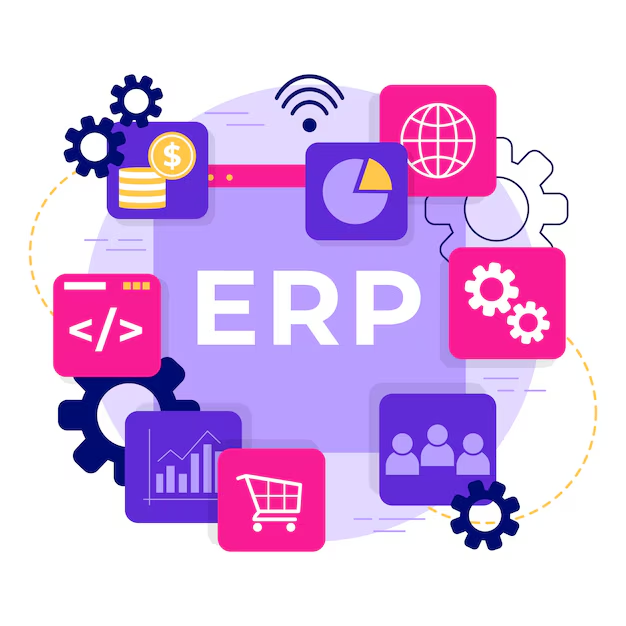
Enterprise Resource Planning (ERP) systems are the cornerstone of a company’s internal operations, acting as the central nervous system that connects multiple departments and business functions. At their core, ERP platforms integrate essential processes such as finance, supply chain management, inventory control, procurement, production, and order fulfillment into a unified system.
This integration allows organizations to eliminate redundant processes, reduce manual errors, and ensure that data flows seamlessly across departments. By centralizing operational information, ERP systems provide a single source of truth that executives and managers can rely on to make informed decisions.
This holistic view not only improves day-to-day operational efficiency but also enables more accurate forecasting, strategic planning, and resource allocation. In addition, modern ERP solutions often include analytics and reporting tools, giving businesses the ability to monitor performance in real time, identify bottlenecks, and respond proactively to market changes.
Ultimately, ERP systems transform disparate departmental functions into a cohesive, data-driven operation that supports growth, scalability, and long-term success. zymofar
CRM (Customer Relationship Management)
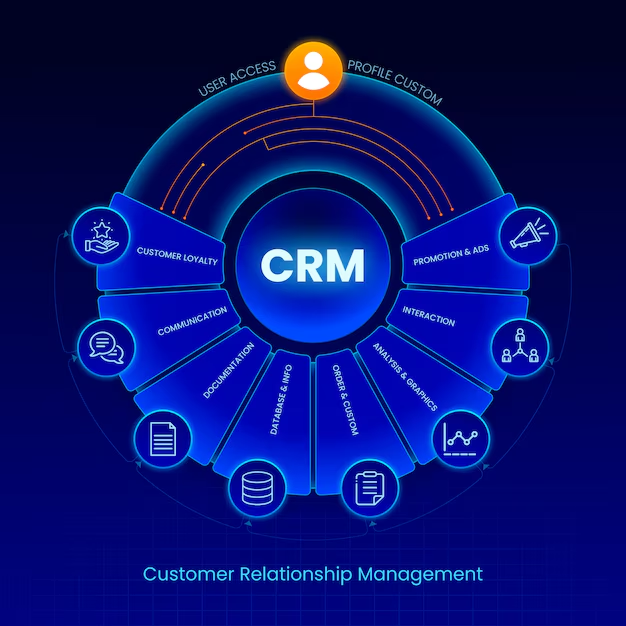
Customer Relationship Management (CRM) systems have become a cornerstone for modern businesses looking to strengthen their connection with clients and optimize their operations. At their core, CRM systems are designed to manage every interaction a company has with its customers, providing a centralized platform where sales, marketing, and customer service teams can collaborate effectively.
A robust CRM system goes far beyond simple contact management. It allows businesses to track leads from initial inquiry to final purchase, monitor sales pipelines, and gain insights into potential opportunities for growth. By organizing this data efficiently, companies can identify patterns in customer behavior, predict future needs, and personalize interactions, ensuring that every communication feels thoughtful and relevant.
Marketing teams also benefit greatly from CRM systems. With tools to manage campaigns, segment audiences, and analyze engagement metrics, businesses can design more effective marketing strategies that resonate with their target audience. This integration between customer data and marketing efforts ensures that campaigns are timely, targeted, and results-driven.
Customer service is another area where CRM shines. By maintaining a detailed record of every interaction, service teams can provide faster, more informed support, reducing response times and increasing customer satisfaction. Whether it’s resolving complaints, answering queries, or anticipating customer needs, CRM empowers teams to deliver a seamless and consistent experience.
Ultimately, a strong CRM system is not just a software tool—it’s a strategic asset. By centralizing information, streamlining processes, and fostering collaboration across departments, businesses can nurture relationships more effectively, enhance loyalty, and drive long-term growth. Companies that invest in the right CRM infrastructure position themselves to meet customer expectations in an increasingly competitive market.
For more insights into optimizing CRM systems for your business, visit ZymoFar.
HR (Human Resource) Systems / HRMS
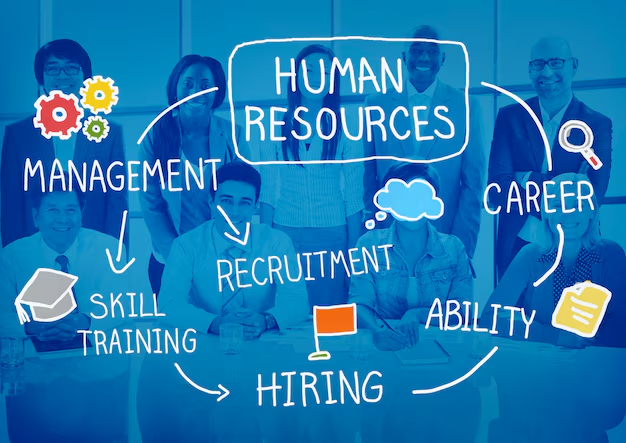
Human Resource (HR) systems, often referred to as Human Resource Management Systems (HRMS), Human Resource Information Systems (HRIS), or Human Capital Management (HCM) platforms, are essential tools for managing the full spectrum of workforce-related activities within an organization. These systems centralize employee information, covering everything from recruitment and onboarding to payroll, benefits administration, attendance tracking, performance evaluations, and training programs.
By consolidating this data in a single, accessible platform, HR systems not only simplify administrative tasks but also provide managers with actionable insights into workforce productivity, engagement, and development. Modern HR solutions often incorporate advanced analytics, enabling organizations to forecast staffing needs, identify skill gaps, and make data-driven decisions that align employee performance with strategic business goals.
Beyond improving operational efficiency, HR systems play a critical role in maintaining regulatory compliance, safeguarding sensitive employee data, and ensuring that policies and procedures are consistently applied across the company. When integrated with ERP and CRM systems, HR platforms contribute to a holistic view of the business, linking workforce performance with operational outcomes and customer success, and thereby driving both employee satisfaction and overall organizational growth.
Why Integration Matters
In many organizations, ERP, CRM, and HR systems continue to function as separate, standalone platforms, each managing its own set of data and processes. While these systems individually serve critical functions, operating them in isolation often leads to fragmented information, inefficiencies, and missed opportunities. For example, customer orders recorded in the CRM may not automatically update inventory or financial records in the ERP, creating discrepancies that require time-consuming manual corrections. Similarly, HR departments may struggle to accurately forecast workforce needs when employee performance, project timelines, and business output remain siloed across multiple systems.
The lack of integration also hampers decision-making at every level. Executives and managers are forced to rely on partial or outdated data, leading to slower response times, suboptimal strategies, and missed market opportunities. Manual data entry, duplicate records, and inconsistent reporting not only increase the risk of errors but also consume valuable time that could be spent on strategic initiatives.
Integrating these Business Systems transforms fragmented data into a unified, accessible ecosystem. By connecting ERP, CRM, and HR platforms, businesses can enable real-time data flow across departments, automate repetitive processes, and ensure that every team—from finance and operations to sales and HR—operates from the same accurate, up-to-date information. This level of cohesion empowers organizations to make faster, smarter decisions, optimize operational efficiency, and respond more effectively to evolving market conditions. As Zymofar notes, seamless integration is no longer a luxury; it is an essential requirement for any business striving for growth, agility, and competitive advantage zymofar
The Power of Integrated Business Systems
When ERP, CRM, and HR systems are fully integrated, organizations experience a transformative shift in how they manage operations, interact with customers, and support their workforce. One of the most immediate benefits is the seamless flow of data across the organization. Information no longer gets trapped within departmental silos, reducing duplication, minimizing errors, and ensuring that every team is working from the same accurate and up-to-date data. According to Place2Business, integrated systems create a cohesive environment where operational, financial, and workforce data are automatically aligned, giving leaders a clear, holistic view of the company’s performance Place2Business.
Integration also empowers teams with real-time insights. Sales and marketing departments can track customer behavior and preferences, operations can monitor workflow efficiency, and HR managers gain visibility into employee productivity and engagement metrics. This interconnected view allows organizations to make informed, strategic decisions with confidence. As Zymofar highlights, these real-time analytics provide actionable intelligence that helps businesses anticipate challenges, seize opportunities, and drive performance across all levels of the organization. Zymofar.
Moreover, integrated Business Systems enable the automation of routine processes, reducing the administrative burden on employees and freeing them to focus on higher-value tasks. Tasks such as updating records, generating reports, or transferring information between systems happen automatically, improving accuracy and efficiency. This not only reduces the risk of human error but also accelerates operational workflows, enhancing productivity throughout the organization.
As IBM emphasizes, “CRM and ERP integration links customer, sales, and operational data in real time… reducing manual work and providing accurate information across teams for faster and smarter decision-making” (IBM). By ensuring that ERP, CRM, and HR systems communicate seamlessly, businesses create a unified, data-driven ecosystem that supports smarter decisions, strengthens customer relationships, and drives sustainable growth.
The Benefits of Harmonized Business Systems
1. Unified View of Your Business
One of the most significant advantages of integrating ERP, CRM, and HR systems is the creation of a unified view of the entire organization—a true “single source of truth.” When these systems communicate seamlessly, every department has access to consistent, accurate, and real-time data, eliminating confusion and reducing the risk of errors caused by fragmented information.
For sales teams, this means they can instantly check product availability, inventory levels, and order status through the ERP system, ensuring that promises made to customers are realistic and achievable. HR departments gain a comprehensive perspective on workforce contributions, allowing managers to see how employee performance impacts customer satisfaction, project outcomes, and overall business goals. Finance teams can leverage integrated operational and customer data to project budgets, forecast revenue, and plan resource allocation more accurately, leading to smarter financial decision-making.
As Zymofar notes, this holistic visibility empowers organizations to break down silos, foster collaboration across departments, and respond more proactively to market changes and internal challenges (Zymofar). By creating a single source of truth, integrated Business Systems not only enhance operational efficiency but also provide the strategic insights necessary for sustainable growth and long-term competitiveness.
2. Seamless Customer & Employee Experiences
Integrating ERP, CRM, and HR systems creates a connected ecosystem that dramatically enhances both customer and employee experiences. When these Business Systems communicate seamlessly, employees gain access to the complete context they need to engage with customers effectively. Sales representatives can view real-time inventory levels, order histories, and customer preferences, while customer service teams can access relevant HR or operational data to resolve inquiries quickly. This level of insight ensures that every interaction is informed, timely, and consistent, building stronger relationships and higher customer satisfaction.
At the same time, managers benefit from a holistic understanding of workforce performance, enabling them to make smarter staffing and operational decisions. For example, HR can see how employee performance aligns with customer outcomes and business objectives, while operations and finance can anticipate resource needs based on upcoming projects or seasonal demand. This visibility allows leaders to align employee assignments, training programs, and incentive plans with strategic business goals, ultimately creating a more motivated, productive, and engaged workforce.
According to Zymofar, organizations that integrate these systems are better positioned to provide seamless, high-quality experiences for both employees and customers, fostering loyalty, efficiency, and a competitive edge in the market (Zymofar). By connecting data and processes across departments, integrated Business Systems empower teams to work smarter, respond faster, and deliver superior outcomes consistently.
3. Faster, More Accurate Decision‑Making
When ERP, CRM, and HR systems are fully integrated, organizations gain the ability to make faster, more informed decisions that drive business performance. Integrated Business Systems consolidate data from every department into a unified platform, feeding dashboards, analytics tools, and reporting systems with accurate, real-time information. This eliminates the delays and inconsistencies that often arise when data is scattered across disconnected systems.
Leaders can access insights into sales performance, operational efficiency, workforce productivity, and financial health all in one place. For example, management can quickly identify trends in customer behavior, assess the impact of resource allocation on project outcomes, or forecast revenue with a higher degree of confidence. This holistic visibility empowers executives to respond proactively to challenges, seize opportunities, and make strategic adjustments without waiting for lengthy reports or manual reconciliations.
As Jitterbit emphasizes, system integration equips businesses with actionable intelligence that enhances both speed and accuracy in decision-making. By providing a comprehensive, real-time view of organizational performance, integrated systems reduce the risk of errors, increase responsiveness, and enable leaders to act with clarity and confidence (Jitterbit). Ultimately, this accelerated, data-driven approach allows companies to remain agile, competitive, and well-positioned for sustainable growth in an ever-changing business environment.
4. Higher Efficiency Across Departments
Integration of ERP, CRM, and HR systems not only improves decision-making but also dramatically increases operational efficiency across every department. When these Business Systems are connected, routine and repetitive tasks that once consumed significant time and resources can be automated, freeing employees to focus on higher-value activities. For example, workflows such as data entry, report generation, payroll processing, and inventory updates are streamlined, reducing the likelihood of human error and ensuring that processes are completed accurately and consistently.
Departments that once operated in isolation can now collaborate seamlessly. HR teams can coordinate workforce planning with operations and finance, ensuring that staffing levels align with production schedules and budget forecasts. Sales and customer service teams can respond to inquiries and process orders faster because they have direct access to real-time inventory, pricing, and delivery information from the ERP system. Finance can track revenue and expenses in real time, while managers can monitor project progress and employee performance without delays.
By eliminating silos and automating cross-departmental workflows, integrated Business Systems create a more efficient, cohesive organization that operates with speed and precision. As Help.HRango notes, this level of efficiency allows companies to reduce overhead, optimize resource allocation, and improve overall productivity, making the business more agile and competitive in the marketplace (Help.HRango). Ultimately, harmonized systems empower organizations to achieve operational excellence while providing employees and customers with seamless, high-quality experiences.
Best Practices for System Integration
Achieving the full benefits of integrated Business Systems requires careful planning and strategic execution. Simply connecting ERP, CRM, and HR platforms is not enough; organizations must follow best practices to ensure that integration is seamless, secure, and aligned with business objectives.
First, it is essential to select the right integration platforms or middleware tools. These solutions should support robust APIs and come with prebuilt connectors for major ERP, CRM, and HR systems, enabling smooth data exchange and reducing the need for custom development. A well-chosen integration platform serves as the backbone that ensures all systems communicate effectively and that workflows remain consistent across departments.
Second, standardizing data definitions and governance across systems is crucial. Without consistent data formats, terminology, and validation rules, organizations risk creating mismatches, errors, and conflicting reports. Clear standards ensure that every department interprets information in the same way, enabling accurate reporting, reliable analytics, and informed decision-making.
Security and compliance are also critical considerations. As sensitive employee and customer information flows between systems, organizations must implement measures to protect data privacy, comply with regulations such as GDPR or HIPAA, and prevent unauthorized access. Integration strategies should include encryption, access controls, and audit trails to safeguard this vital information.
Finally, involving stakeholders from all relevant departments early in the integration design process ensures that workflows meet real business needs. By engaging teams from finance, HR, operations, and sales, organizations can identify potential bottlenecks, align processes with strategic goals, and create solutions that support cross-departmental collaboration.
As Alinscribe emphasizes, these practical steps transform integrated Business Systems from a set of disconnected tools into a collaborative, intelligent ecosystem. When executed thoughtfully, integration allows systems to do more than coexist—they work together harmoniously, delivering operational efficiency, data accuracy, and actionable insights that drive sustainable growth (Alinscribe).
Conclusion
In the modern business landscape, ERP, CRM, and HR systems are no longer optional tools—they are essential components of a well-functioning organization. However, their true potential is only realized when these Business Systems are integrated and operate as a cohesive ecosystem. Without integration, organizations face fragmented data, inefficiencies, and slower decision-making, which can hinder growth and limit their ability to respond to market changes.
By connecting ERP, CRM, and HR platforms, businesses create a unified, data-driven environment where information flows seamlessly across departments. This integration enables real-time insights into customer behavior, operational performance, and workforce productivity, allowing leaders to make faster, more accurate decisions. Automated workflows reduce repetitive administrative tasks, freeing employees to focus on strategic and value-driven activities, while ensuring consistency and accuracy throughout the organization.
Moreover, integration fosters a better experience for both employees and customers. Teams have the context and tools they need to collaborate effectively, serve customers with precision, and align workforce efforts with organizational goals. Following best practices—such as using robust integration platforms, standardizing data governance, ensuring security and compliance, and involving stakeholders early—ensures that systems do not merely coexist but actively collaborate to drive business success.
Ultimately, integrated Business Systems are the foundation for sustainable growth, operational excellence, and competitive advantage. Organizations that invest in harmonizing their ERP, CRM, and HR systems are not only optimizing efficiency but also building the agility, intelligence, and resilience necessary to thrive in an increasingly dynamic marketplace. The future belongs to businesses that view integration not as an IT project, but as a strategic imperative that empowers every aspect of their operations.
Read more : What Actually Breaks Inside a Company as It Scales