Table of Contents
Many companies view increasing sales as the ultimate indicator of success. A rising revenue chart often generates excitement among stakeholders, employees, and investors alike. However, the reality is that higher revenue does not automatically translate into greater profitability, operational efficiency, or long-term sustainability. For businesses aiming to thrive—not just survive—it’s essential to distinguish between Growing Revenue and Scaling Operations. While both are crucial for business success, they serve very different purposes and require distinct strategies.
Revenue growth primarily measures the increase in income from products or services, focusing on the top line of the financial statement. It is a reflection of market demand, customer acquisition, and pricing strategies. Scaling operations, on the other hand, is about ensuring that the business can handle increased demand without a proportional rise in costs or operational complexity. It involves building systems, optimizing processes, and creating infrastructure that allows the company to grow efficiently.
Without this distinction, businesses risk celebrating growth that isn’t sustainable. For example, a company might double its sales in a year by hiring more staff to manually process orders. Revenue appears impressive, but operational inefficiencies, employee burnout, and escalating costs quickly eat into profits. Understanding the difference between Growing Revenue and Scaling Operations allows founders, executives, and operational leaders to pursue growth in a way that is sustainable, profitable, and strategically sound over the long term.
What Does Growing Revenue Mean?

At its core, Growing Revenue and Scaling Operations start with revenue growth. However, it’s important to understand that revenue growth by itself does not necessarily indicate a healthy, sustainable business. Revenue growth simply refers to the increase in a company’s income, which can result from higher sales volumes, attracting new customers, or increasing prices for products or services. While it is often celebrated as a sign of success, it only represents one side of the growth equation. forbes
Businesses can pursue revenue growth through several common strategies:
- Expanding sales teams: Hiring additional sales representatives to reach more customers and increase the number of transactions.
- Launching new marketing campaigns: Utilizing advertising, content marketing, and social media to drive awareness and attract buyers.
- Entering new markets: Exploring untapped geographic areas or new customer segments to broaden the company’s reach.
- Adding new products or services: Diversifying offerings to meet evolving customer needs and capture additional revenue streams.
While these methods can effectively increase income, they often come with additional costs, complexity, and operational challenges. At this stage, Growing Revenue and Scaling Operations are frequently not aligned. A company may achieve impressive revenue numbers, but without efficient systems in place, costs can rise at the same rate—or even faster—than income.
Example of Revenue Growth Without Scaling
Consider a mid-sized e-commerce company that manages to double its sales over the course of a year. To meet demand, it hires more staff, implements manual order processing, and expands warehouse operations without investing in automation or standardized processes. While total revenue has increased, operational inefficiencies multiply: employee workloads become overwhelming, errors in order fulfillment rise, and profit margins remain flat or even decline.
This scenario illustrates an important point: revenue growth alone does not equal scalability. Growing Revenue and Scaling Operations may appear related, but revenue can increase without the business being able to sustain or manage that growth effectively. True business success comes when revenue growth is paired with scalable operations, allowing the company to increase income without a proportional increase in costs or complexity.
What Does Scaling Operations Really Mean?

While many businesses focus on increasing sales, true long-term success depends on their ability to scale operations. Scaling is fundamentally different from simply growing revenue—it’s about expanding output, services, or products without a proportional increase in costs, complexity, or resource requirements. In other words, scaling allows a business to grow efficiently and sustainably, rather than just temporarily inflating revenue.
In the context of Growing Revenue and Scaling Operations, scaling operations involves creating systems, processes, and infrastructure that can support increasing demand without causing operational bottlenecks or escalating costs. It is the difference between a business that grows chaotically and one that grows systematically.
Key components of scaling operations include:
- Automation and Technology: Implementing tools and software that reduce manual effort, such as automated order processing, customer relationship management (CRM) systems, and workflow automation platforms. Automation allows businesses to handle more transactions without multiplying human labor.
- Standardized Workflows: Developing repeatable processes ensures that tasks are performed consistently and efficiently. Standardization minimizes errors, reduces dependency on individual employees, and allows new team members to contribute effectively without extensive training.
- Process Optimization: Continuously analyzing and improving operations to eliminate inefficiencies, remove bottlenecks, and streamline workflows. Optimized processes help businesses maintain quality and speed even as they grow.
- Centralized Data and Reporting: Collecting and managing data in a centralized system enables leaders to make informed decisions, anticipate challenges, and identify opportunities. Reliable data ensures that growth is guided by insights rather than guesswork.
When Growing Revenue and Scaling Operations are properly aligned, a business experiences revenue growth that outpaces cost increases. This alignment allows companies to expand their reach, serve more customers, and increase profits without proportionally increasing operational overhead. In essence, scaling operations transforms revenue growth from a potentially chaotic process into a structured, sustainable, and profitable trajectory. hbr.org
Example of Scaling in Action
Consider a SaaS company that experiences rapid customer acquisition. Instead of hiring dozens of new support staff for every ten thousand new users, the company invests in a ticketing system, knowledge base, and automated onboarding tools. These systems allow the business to support a much larger customer base without dramatically increasing operational costs. Here, Growing Revenue and Scaling Operations work together—revenue grows while operational efficiency improves, resulting in higher margins and a scalable business model.
Key Differences Between Growing Revenue and Scaling Operations
To truly understand the distinction between Growing Revenue and Scaling Operations, it’s important to examine their core differences across multiple dimensions. While the two concepts are interconnected, they focus on very different aspects of a business’s growth journey. Misunderstanding or overlooking these differences can lead to operational strain, declining profit margins, and unsustainable growth—even when revenue figures appear strong.
| Aspect | Growing Revenue | Scaling Operations |
|---|---|---|
| Focus | The primary goal is to increase sales and top-line income. Efforts often center on acquiring new customers, launching marketing campaigns, or raising prices. | The focus is on building efficiency through systems, processes, and infrastructure that allow the business to grow sustainably. |
| Cost Behavior | Costs tend to rise proportionally with revenue. For example, hiring more staff or increasing production directly increases expenses. | Costs grow slowly or remain stable due to streamlined processes, automation, and optimized operations. Incremental revenue growth requires minimal additional resources. |
| Risk Level | High operational strain is common. Rapid growth without proper systems can create chaos, bottlenecks, and employee burnout. | Controlled and predictable growth. Scalable operations reduce risk by ensuring that the business can handle higher demand efficiently. |
| Sustainability | Often short-term. Revenue may spike temporarily, but without scalable systems, growth is difficult to maintain over time. | Long-term and sustainable. Scalable operations provide a foundation for ongoing growth and resilience against market fluctuations. |
| Profit Margins | Margins are often flat or even shrink, as rising costs offset additional revenue. | Profit margins expand because operational efficiency allows revenue to grow faster than expenses. |
Why This Distinction Matters
Many fast-growing businesses fall into the trap of focusing solely on revenue. They celebrate higher sales while ignoring the hidden costs and inefficiencies building up behind the scenes. This can lead to overworked employees, inconsistent customer experiences, and operational bottlenecks that ultimately undermine profitability.
For example, a retail company might increase its sales by opening new locations and hiring more staff. While revenue grows, the company may find that operational inefficiencies—like inventory mismanagement or staffing challenges—erode profits. This is Growing Revenue without Scaling Operations, where growth exists on paper but is unsustainable in practice.
By contrast, a company that invests in scalable systems—such as automated inventory management, centralized reporting, and standardized staff training—can achieve Growing Revenue and Scaling Operations simultaneously. Revenue continues to rise, but costs increase at a slower rate, processes remain manageable, and profit margins improve.
In essence, understanding the differences between Growing Revenue and Scaling Operations equips business leaders to make strategic decisions that balance growth with operational efficiency. It’s the key to building a business that can expand without collapsing under its own success.
Why Growing Revenue Without Scaling Is Dangerous
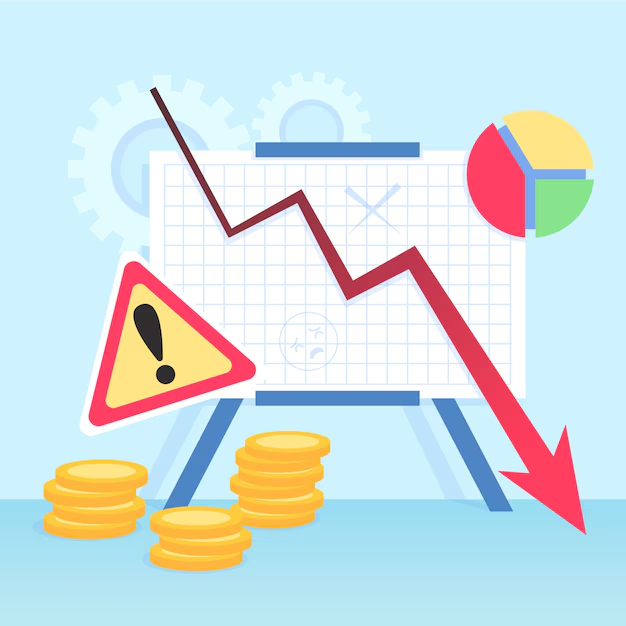
One of the most common and costly mistakes businesses make is focusing solely on revenue growth without simultaneously investing in scalable operations. While a rising revenue chart looks impressive, ignoring the systems and processes needed to support that growth can quickly create operational chaos. In the context of Growing Revenue and Scaling Operations, neglecting scaling can turn what appears to be success into a looming business crisis.
When a company prioritizes revenue over scalable systems, several critical problems often emerge:
- Teams Become Overwhelmed: As sales increase, employees may be required to take on more responsibilities without the support of streamlined processes or automation. Customer service, order fulfillment, and internal reporting can become overwhelming, leading to stress, mistakes, and employee burnout.
- Errors Multiply: Manual processes and ad-hoc workflows are often sufficient when the business is small, but as demand grows, the likelihood of errors increases dramatically. Mistakes in product delivery, invoicing, or communication can damage the company’s reputation and lead to lost revenue.
- Customer Experience Declines: Rapid growth without scalable operations can harm the very customers driving revenue. Delayed responses, inconsistent service, and fulfillment issues can erode trust, reduce repeat purchases, and generate negative reviews—ultimately undermining revenue growth itself.
- Decision-Making Slows: Without centralized data and standardized reporting, leaders are forced to make decisions based on incomplete or inconsistent information. Bottlenecks form, approvals take longer, and the organization loses its agility to respond to market changes effectively.
The High Cost of Misaligned Growth
Consider a fast-growing e-commerce company that experiences a surge in sales. Excited by the numbers, the leadership team focuses on hiring more staff to meet demand, but does not invest in warehouse automation, inventory tracking systems, or standardized fulfillment processes. Initially, revenue continues to rise, but operational inefficiencies multiply. Orders get delayed, employees become frustrated, and customer complaints increase. Within months, profit margins shrink, and the company risks reputational damage.
This is a clear example of Growing Revenue without Scaling Operations—growth is happening, but the business is not equipped to handle it efficiently. In extreme cases, companies that fail to scale can collapse under their own weight, despite impressive revenue figures.
Synchronizing Revenue Growth and Operations
True business success comes when Growing Revenue and Scaling Operations are aligned from the start. By investing in scalable processes, automation, and centralized data early, businesses can handle higher demand without proportionally increasing costs. Teams remain productive, errors decrease, customer experience improves, and leaders can make faster, data-driven decisions.
In short, revenue growth is only sustainable when paired with scalable operations. Focusing solely on sales may provide a temporary boost, but integrating scaling into growth strategies ensures that the business can thrive long-term, turning opportunities into sustainable, profitable success.
Read more : The Real Cost of Scaling Without a Central Operating System
Scaling Operations Enables Sustainable Revenue Growth

Revenue growth is exciting, but without the proper operational systems in place, it can quickly become overwhelming. This is where scaling operations becomes critical. When businesses invest in scalable processes and technology, Growing Revenue and Scaling Operations work together seamlessly, creating a cycle of sustainable growth. Properly designed operational systems not only support higher revenue—they actively enhance efficiency, reduce errors, and improve decision-making, enabling companies to expand without compromising quality or profitability.
Key Enablers of Scaling Operations
To align Growing Revenue and Scaling Operations, companies must implement tools and processes that make scaling achievable and efficient:
- ERP or Central Operating Systems: Enterprise Resource Planning (ERP) systems integrate core business processes—such as inventory management, accounting, procurement, and supply chain operations—into a unified platform. This centralization reduces operational friction, provides real-time insights, and allows the company to manage higher volumes without proportional increases in staff or manual effort.
- CRM Automation: Customer Relationship Management (CRM) systems automate sales tracking, lead nurturing, and customer communications. Automation reduces manual work, ensures consistency, and allows sales teams to focus on closing deals rather than administrative tasks. This directly supports sustainable revenue growth while maintaining customer satisfaction.
- Financial Forecasting Tools: Accurate financial forecasting allows leaders to anticipate cash flow requirements, plan investments, and manage operational costs effectively. By aligning revenue projections with operational capacity, businesses can grow without overextending themselves or creating resource bottlenecks.
- Clear Ownership of Processes: Assigning clear responsibilities for each operational function ensures accountability and reduces bottlenecks. When each team or individual knows their role in the growth process, workflows run smoothly, decisions are made faster, and errors are minimized.
Real-World Impact of Scaling Operations
Consider a rapidly growing subscription-based software company. By implementing a robust CRM system, automated billing, and a centralized support platform, the company is able to manage thousands of new users each month without hiring a proportional number of additional staff. Revenue continues to increase, but operational efficiency keeps costs under control. Teams can focus on innovation and customer satisfaction rather than firefighting daily operational challenges.
This example demonstrates the power of aligning Growing Revenue and Scaling Operations. Rather than revenue growth creating operational chaos, scalable systems enable the business to handle increased demand efficiently, maintain quality, and improve profit margins.
In essence, scaling operations transforms growth from a temporary spike into a predictable, sustainable trajectory. By leveraging technology, automation, and clear processes, businesses can ensure that revenue growth becomes a long-term competitive advantage rather than a short-term challenge.
The Financial Impact of Scaling Operations
From a financial perspective, Growing Revenue and Scaling Operations directly affect profitability.
- Revenue growth alone increases cash flow but also increases expenses
- Operational scaling improves margins and cash efficiency
Companies that master Growing Revenue and Scaling Operations often see:
- Lower cost per transaction
- Higher EBITDA margins
- Better investor confidence
This is why investors often ask about systems and processes, not just revenue numbers.
When Should a Business Start Scaling?
A common misconception is that scaling should wait until revenue is high. In reality, Growing Revenue and Scaling Operations should evolve together.
Early signs it’s time to scale:
- Repeated manual work
- Inconsistent reporting
- Bottlenecks in approvals
- Customer complaints due to delays
Proactive scaling ensures that Growing Revenue and Scaling Operations stay balanced as the business expands. investopedia
Real-World Example
Consider two companies with identical revenue growth:
- Company A focuses only on sales
- Company B invests in systems and automation
After three years:
- Company A struggles with chaos and high costs
- Company B scales smoothly with fewer employees and higher profits
The difference lies entirely in how they approached Growing Revenue and Scaling Operations.
Aligning Growing Revenue and Scaling Operations
To align Growing Revenue and Scaling Operations, businesses should:
- Map critical processes
- Eliminate manual dependencies
- Invest in scalable technology
- Assign clear process ownership
- Measure efficiency, not just sales
This alignment transforms growth into a competitive advantage rather than a liability.
read more : Why Growing Businesses Fail Without a Central Operating System
Conclusion
The difference between Growing Revenue and Scaling Operations is the difference between temporary success and lasting impact. Revenue growth brings opportunity, but only scalable operations turn that opportunity into sustainable profitability.
Businesses that understand and apply the principles of Growing Revenue and Scaling Operations build stronger foundations, healthier teams, and more resilient organizations—ready to grow without breaking.